GeoSpatial Thinking: Describing Space in Geography
How People See ‘Space’ and ‘Spatial’
From Oxford Learners Dictionaries: about ‘Space’
Space noun
uncountable - the area outside the earth’s atmosphere where all the other planets and stars are
countable - an area or a place that is empty
uncountable - an amount of an area or of a place that is empty or that is available for use
countable, uncountable - a place, especially a room or a building, that can be used for a particular purpose
From Oxford Learners Dictionaries: about ‘Spatial’ and ‘Geospatial’
Spatial adjective relating to space and the position, size, shape, etc. of things in it
Geospatial adjective, only before noun relating to information that is associated with a particular location
How AI See ‘Space’ and ‘Spatial’
generated and modified based on Pi.ai’s response
Spatial refers to anything related to space, including the location, size, shape, and orientation of objects or elements within a given area or environment. It’s a broad term that’s used in many different fields and contexts, such as geography, architecture, interior design, and psychology.
Some examples of spatial concepts include:
Spatial awareness/perception: This refers to an individual’s ability to understand and navigate their surroundings, including the ability to perceive and judge distances, directions, and relationships between objects.
Spatial reasoning: This involves understanding and reasoning about spatial relationships between objects, such as their relative positions, distances, and orientations.
Spatial planning: This involves the organization and layout of physical spaces, such as the design of buildings, cities, or public spaces, to maximize functionality, efficiency, and aesthetics.
Spatial data: This includes any information or datasets that relate to the location, shape, or other spatial characteristics of objects or features, such as maps, satellite images, or GPS coordinates.
In general, .redspatial refers to anything that involves the arrangement or characteristics of objects or elements within a physical space.
So, what is Space, Spatial, and Geospatial?
Space is a two- or three-dimensional physical realm that encompasses and contextualizes the location of objects and beings within it.
Spatial-[some object] is the information related to the positional or geographical aspects and relationships of a specific object.
Geospatial: space and spatial can refer to any ‘space’ and ‘spatial’; to differentiate and specifying geographical space, we use the term geospatial.
Here, the two terms spatial and geospatial can be used interchangeably, both refer to the space in geographical context.
How Geographers See ‘Space’ and ‘Spatial’
The space–place (‘splatial’) Framework
Adapted from Understanding the New Human Dynamics in Smart Spaces and Places: Toward a Splatial Framework
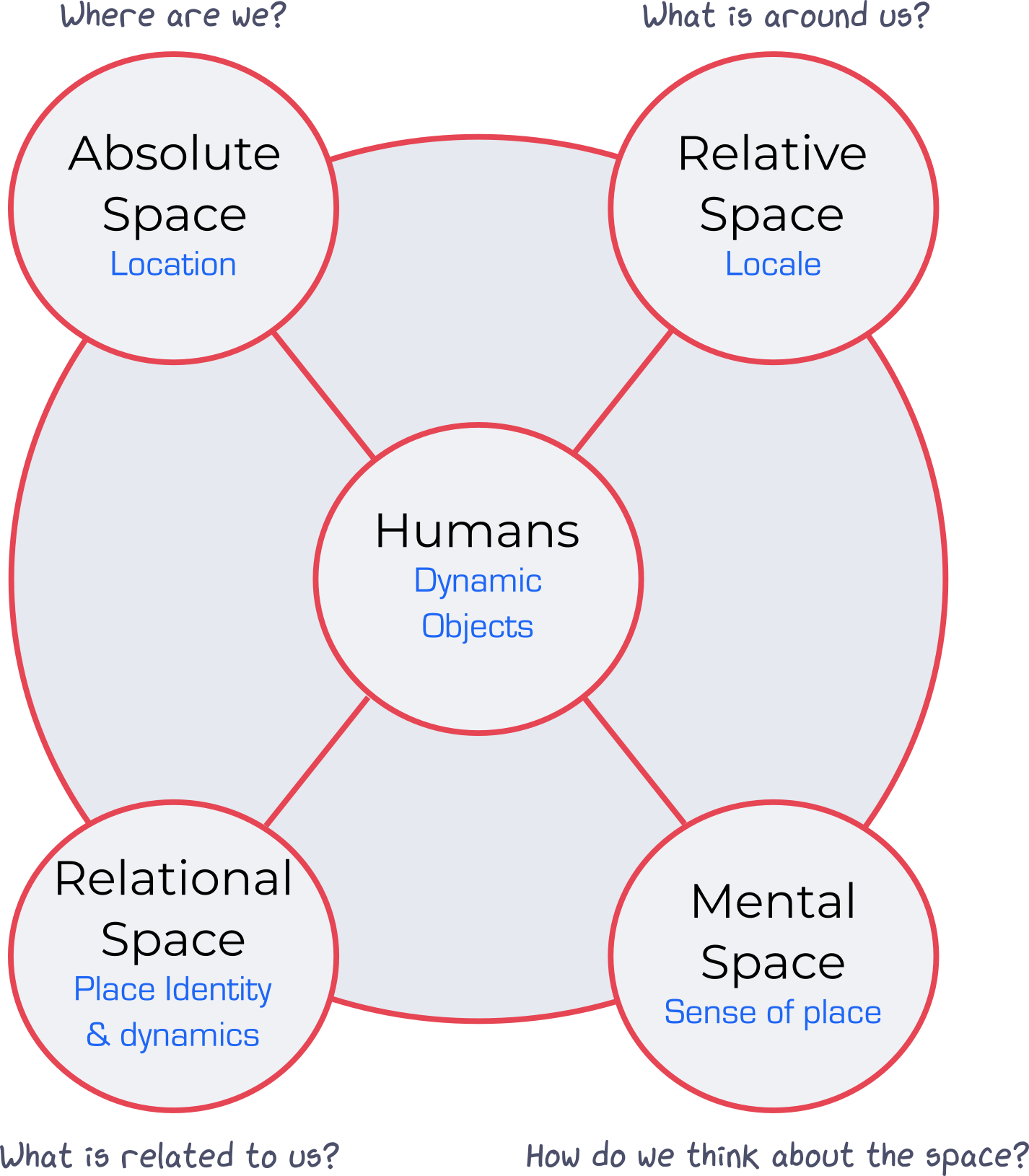
The splatial framework.
Absolute Space
Absolute space is about the location itself---where are the studying object?
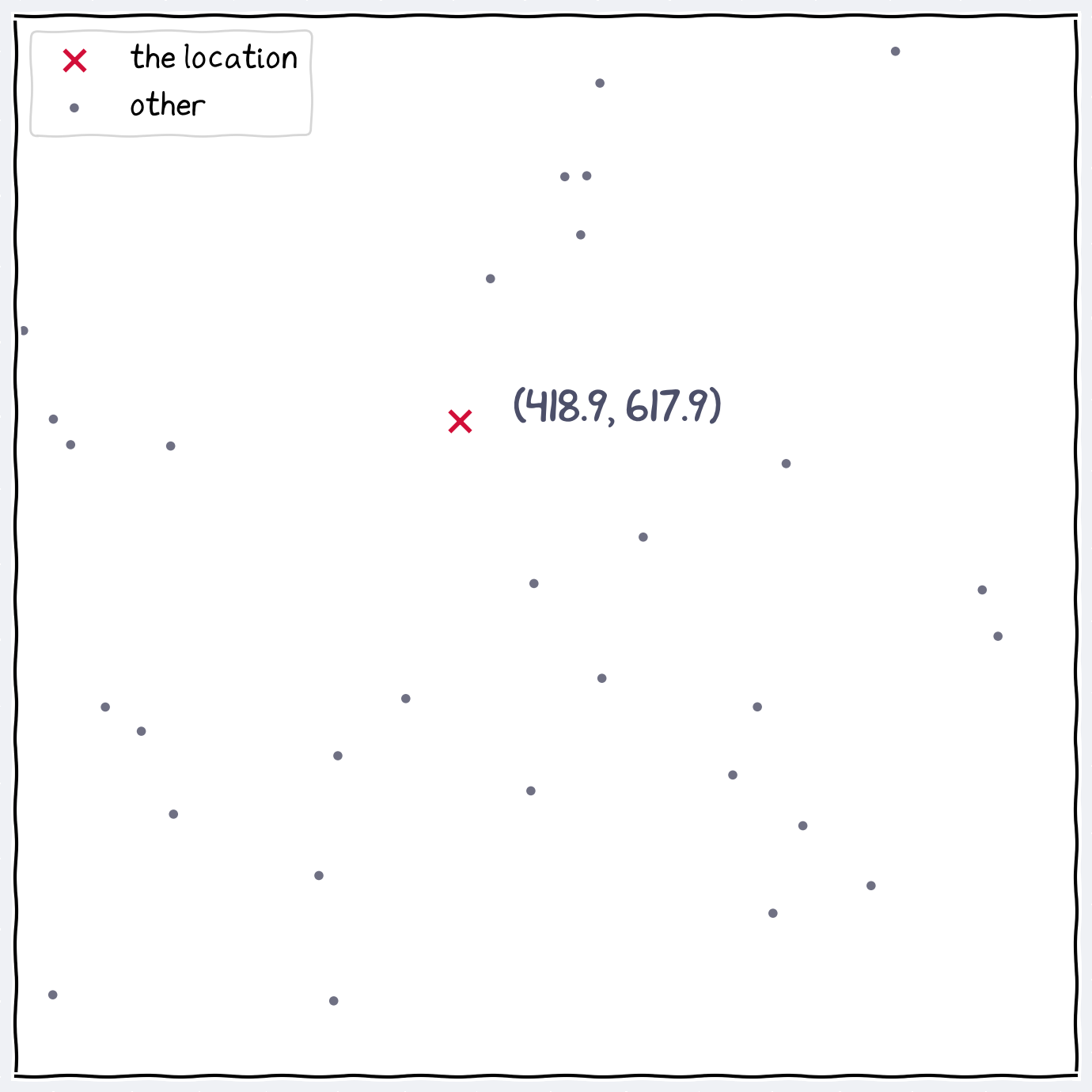
Absolute Space. The red-X marker shows where the current location is.
Relative Space
Relative space is about the nearby area---relative to the current target/space.
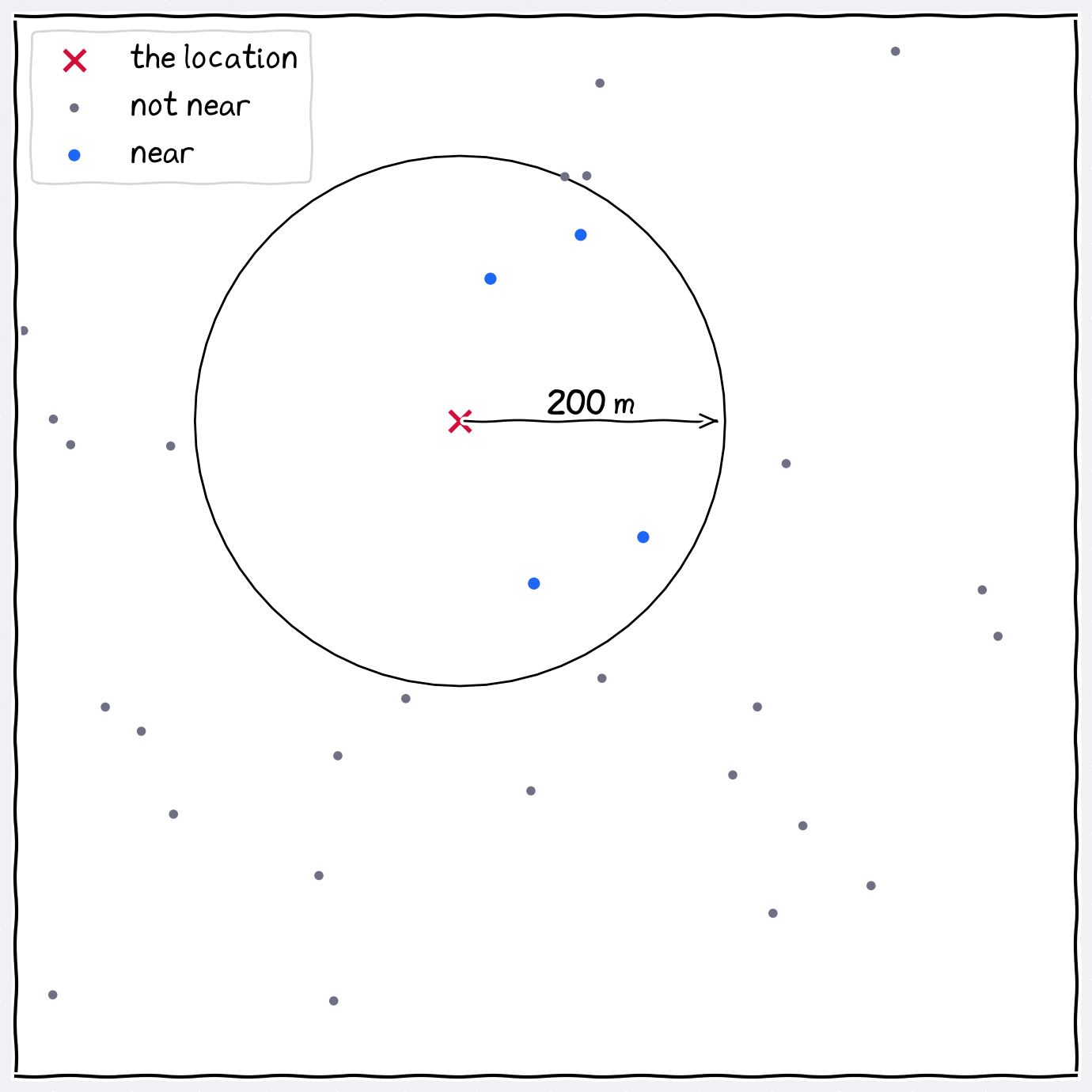
Relative Space. The buffer zone shows the neighborhood of current location.
Relational Space
Relational space is about the connectivity and the structure of connections---how connected are them?
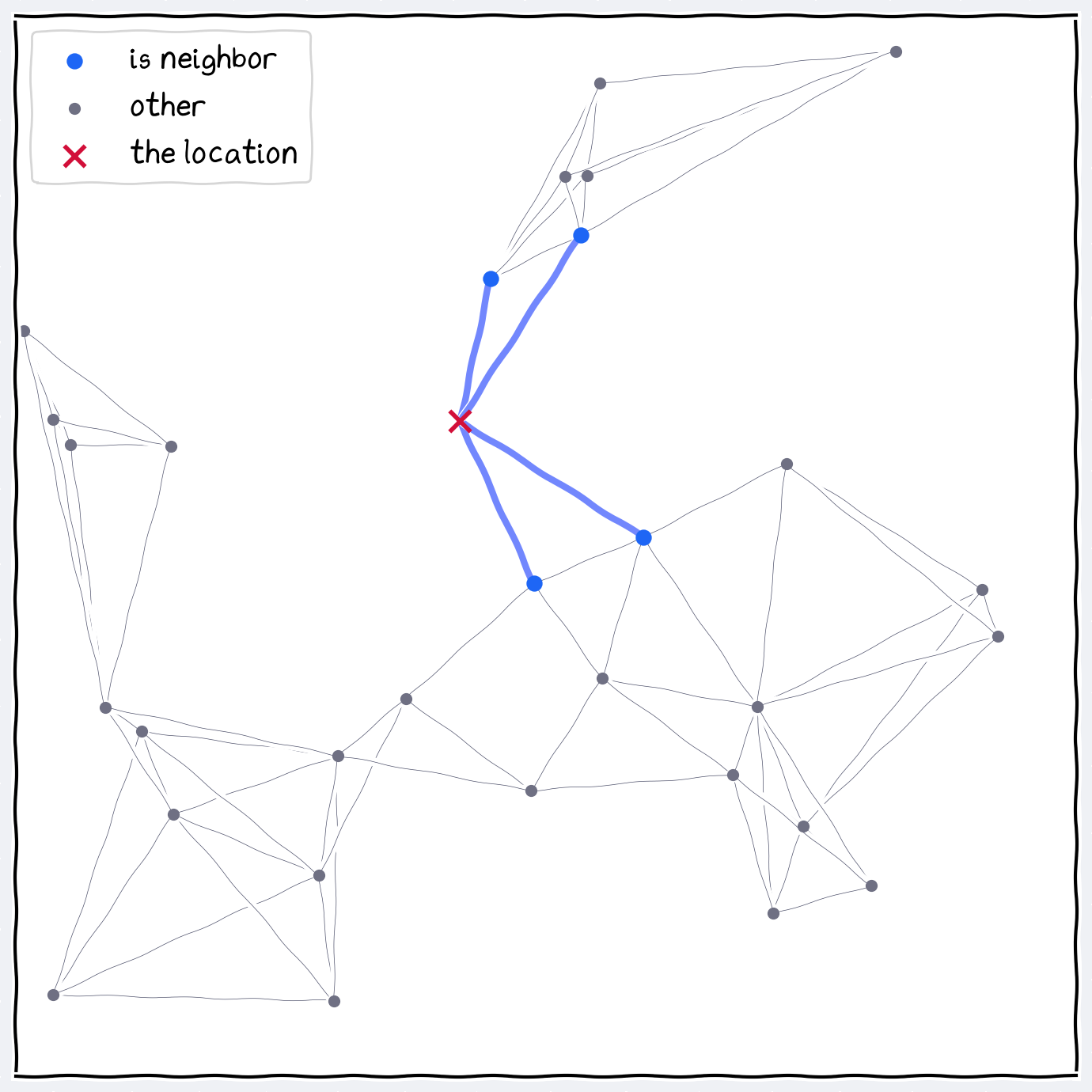
Relational Space. The links show the connections between spatial units. Those connected to the current location are highlighted in blue.
Mental Space
Mental space is about how people think about the location.
In modelling, we can go beyond ‘mental’, and makes it any type of attribute.
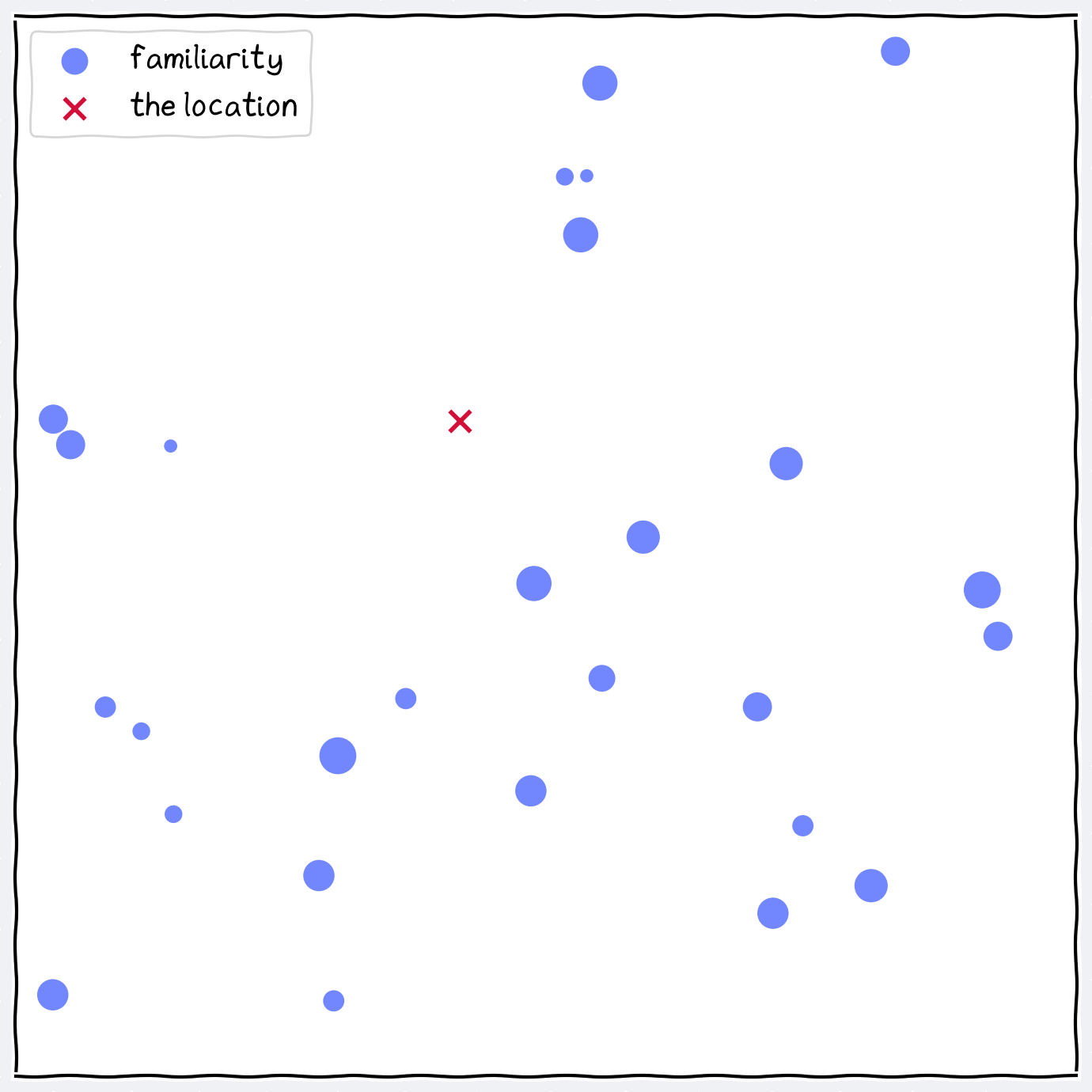
Mental Space. The size of point shows the familiarity of a person who stay at the current location.
Summary
In general, what does space means?
outer space
a physical location/place/area that is empty, i.e., a gap
a physical location/venue serves a particular urban function/purpose.
How geographers see ‘space’? The 4 types/levels of space:
Absolute Space: the locations (coordinates)
Relative Space: the nearby area (buffer, search radius)
Relational Space: the connections & topological structure
Mental Space: how people think about the space, a dimension beyond physical space
As a geographer / geospatial data analyst, what is ‘spatial information’?
data related to the 4 types of space
where is it?
what is found next to it?
what is connected to it?
how people describe it?
attributes data (statistical, non-spatial) that attached to the space, e.g.,
the size (capacity)
the type (urban functions)
the crowdedness
the ranking
the demographic structure
etc.
- Shaw, S.-L., & Sui, D. (2019). Understanding the New Human Dynamics in Smart Spaces and Places: Toward a Splatial Framework. Annals of the American Association of Geographers, 110(2), 339–348. 10.1080/24694452.2019.1631145